
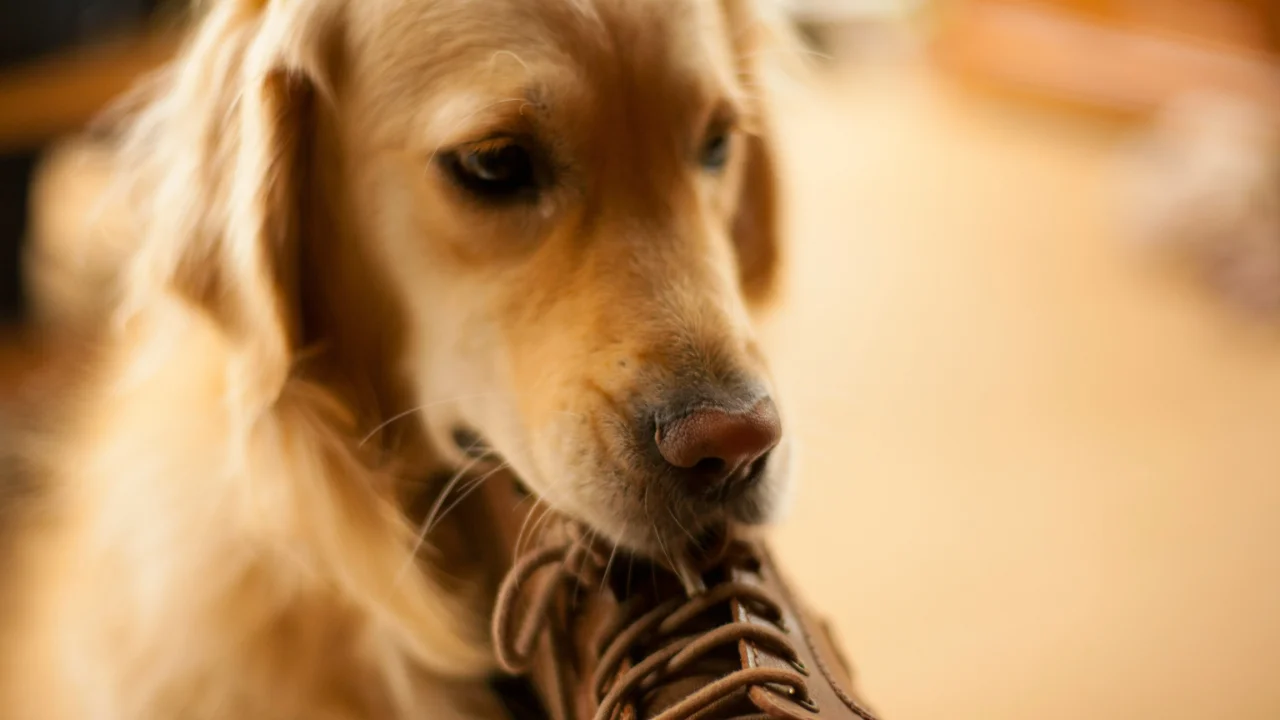

TL;DR: What You Need to Know About Dog Chewing
- It's normal: Chewing keeps jaws strong, teeth clean, and brains busy. The goal isn't to stop a dog from chewing altogether, it's to point it at the right things.
- Winter makes it worse: Short walks, dark evenings, and cabin fever leave a lot of dogs with energy and nothing to do with it.
- Look for a cause: Teething, separation anxiety, hunger, stress, and mouth pain can all look like "bad behaviour."
- Redirect, don't punish: Focus on redirecting your dog's chewing to more desirable objects, like a chew toy, and praise. Scolding after the fact doesn't work.
- Make it easy to succeed: If the boots aren't on the mat, they can't get eaten. Half the battle is just tidying up so books and children's toys are stored away.
- Burn energy indoors: Ten minutes of sniffing out hidden kibble can tire a dog more than a cold, rushed walk.
- Know when it's urgent: A missing sock or chunk of toy that might be inside your dog is worth a phone call that same day.
If your dog has been working through your shoes, baseboards, or couch cushions since the snow arrived, you're definitely not alone. Contact us, and our veterinary team can help you figure out what's behind it and make a plan.
You come home after a long day, and there it is: the chewed corner of the rug, a shredded TV remote, or a boot that will never be the same. Your dog greets you at the door like nothing happened. If this has been happening more since November, the weather might be part of the story.
Here in Canada, winter can mean months of shorter walks, icy sidewalks, and evenings that start at 4:30. Dogs bred to work, run, and sniff all day suddenly have a lot less to do. Many of them turn to chewing as a way to fill the time, and it's usually your stuff they pick.
In this guide, we'll explain why dogs chew, why it gets worse in winter, how to tell boredom from anxiety or a health issue, and how to stop dog chewing with steps that actually work. We'll also share indoor activities to help your dog through the cold months. Read on to save your furniture.
Why Dogs Chew in the First Place
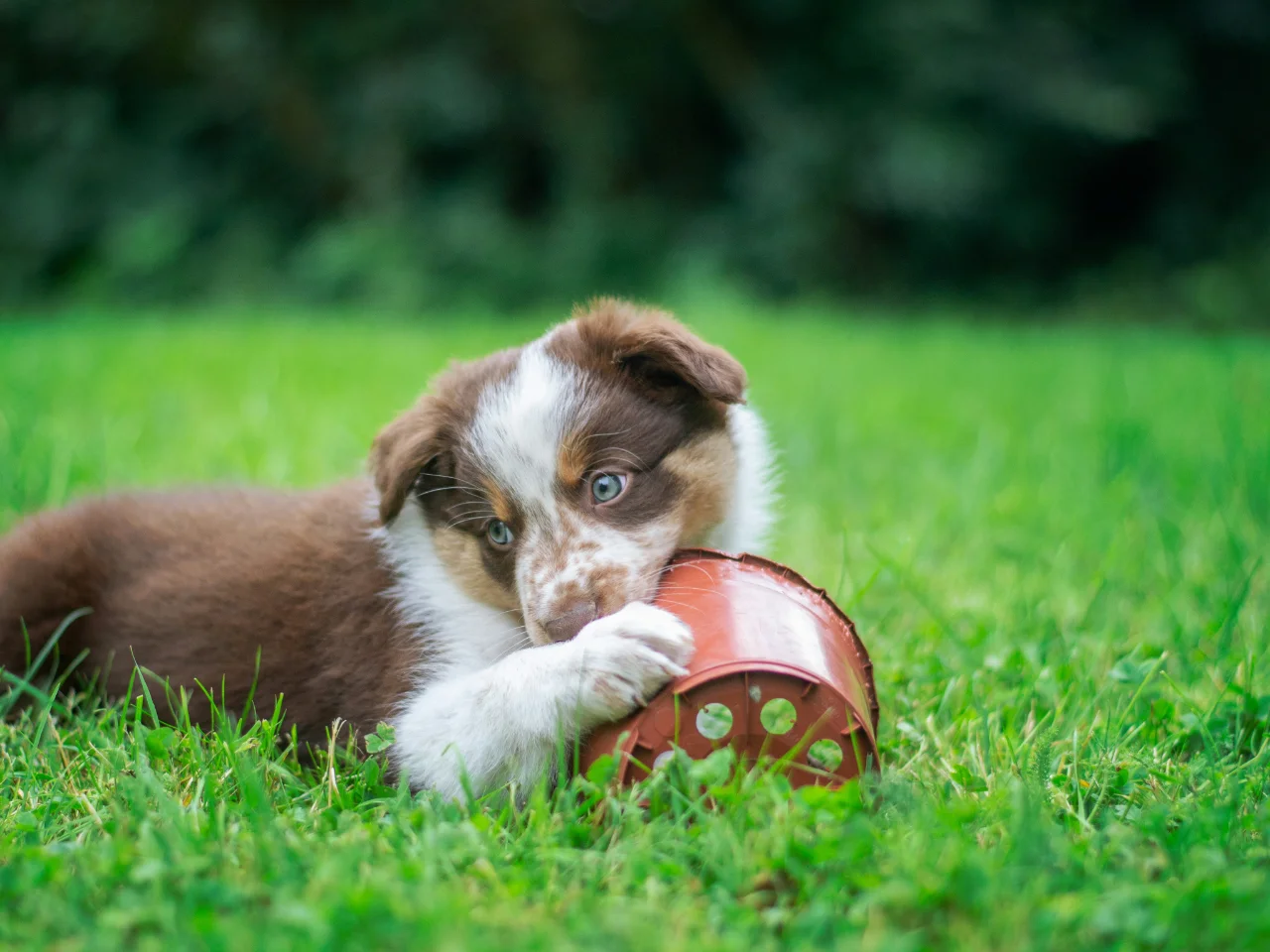
Chewing is a normal, healthy dog behaviour, and plenty of dogs simply enjoy chewing. Dogs explore the world with their mouths, much like toddlers use their hands. Chewing helps release tension and feels calming, which is why many dogs chew more when they're stressed or bored.
Puppies who chew on everything
Puppies begin chewing on objects to figure out the world, and teething makes their gums sore until the adult teeth are in at around six months old. So yes, the chair legs are in danger for a while. You'll be seeing us a fair bit during that time for puppy vaccinations, and teething questions are always welcome at those visits.
Adult dogs who chew on things
Adult dogs like chewing for fun, to keep their teeth clean, and to pass the time. Some breeds, like Labs, retrievers, and terriers, are especially enthusiastic chewers. Chewing in dogs only becomes a problem when it's aimed at the wrong things.
Why Chewing Gets Worse During Long Winters
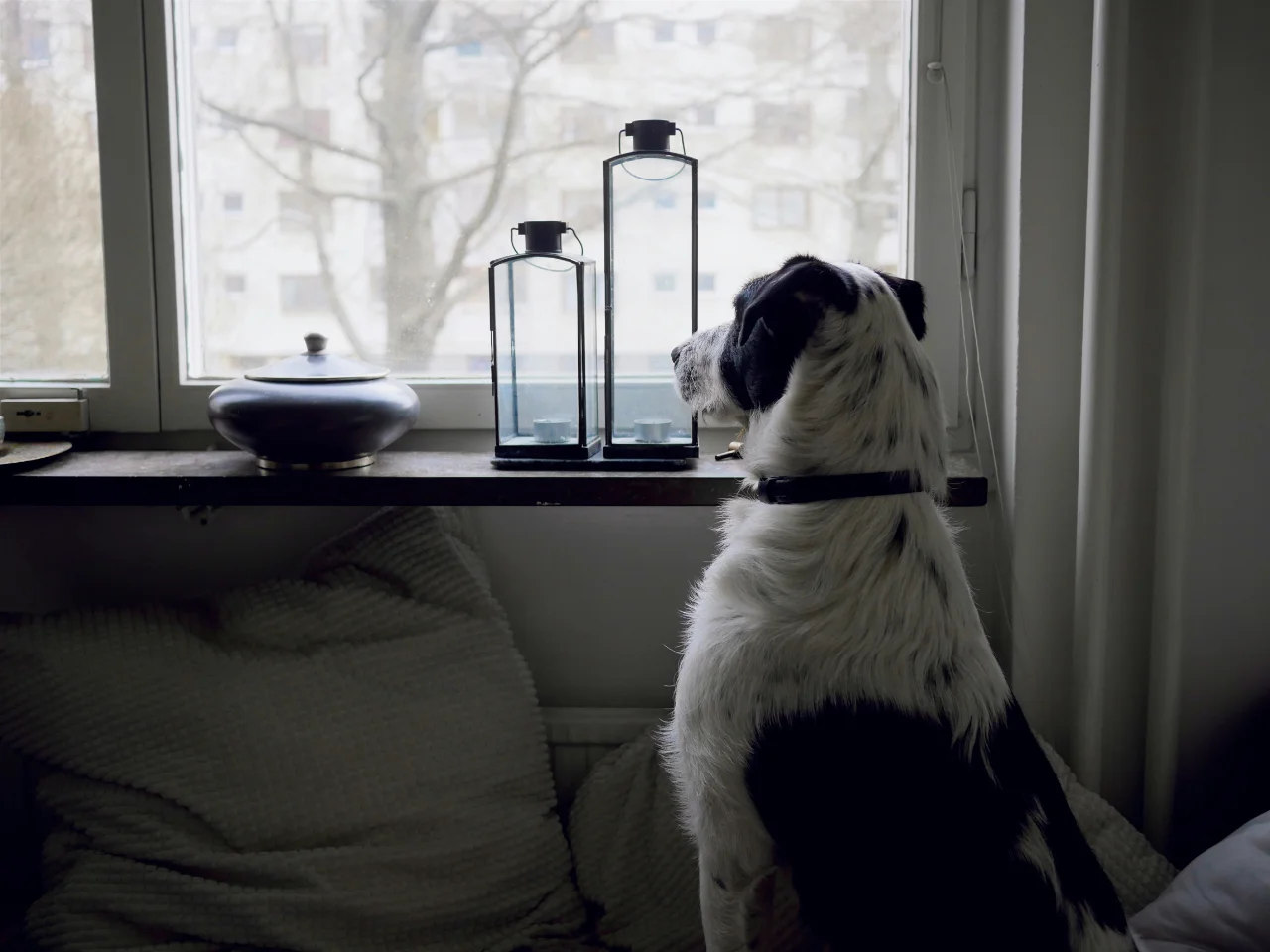
By mid-January our front desk has heard more than a few couch-cushion stories. Winter sets dogs up for it in a handful of ways:
- Less exercise: On the bitter days, a walk might be ten minutes around the block. That's often the right call, as our article on how cold is too cold for dogs explains, but the energy has to go somewhere.
- Less mental stimulation: Walks aren't just exercise. Sniffing new smells is a big part of how dogs burn mental energy. Fewer walks mean fewer smells.
- More time indoors: Dogs spend more hours in the same rooms, with the same toys, looking at the same things.
- Changes in routine: Holiday visitors, travel, and busy schedules can leave dogs stressed or under-exercised.
- Darker days: Some dogs get a bit flat in winter. Our guide to seasonal lethargy in dogs covers why.
When a dog spends extended periods indoors, they often turn to chewing, which is an easy outlet for all that spare energy.
Is It Boredom or Something Else?
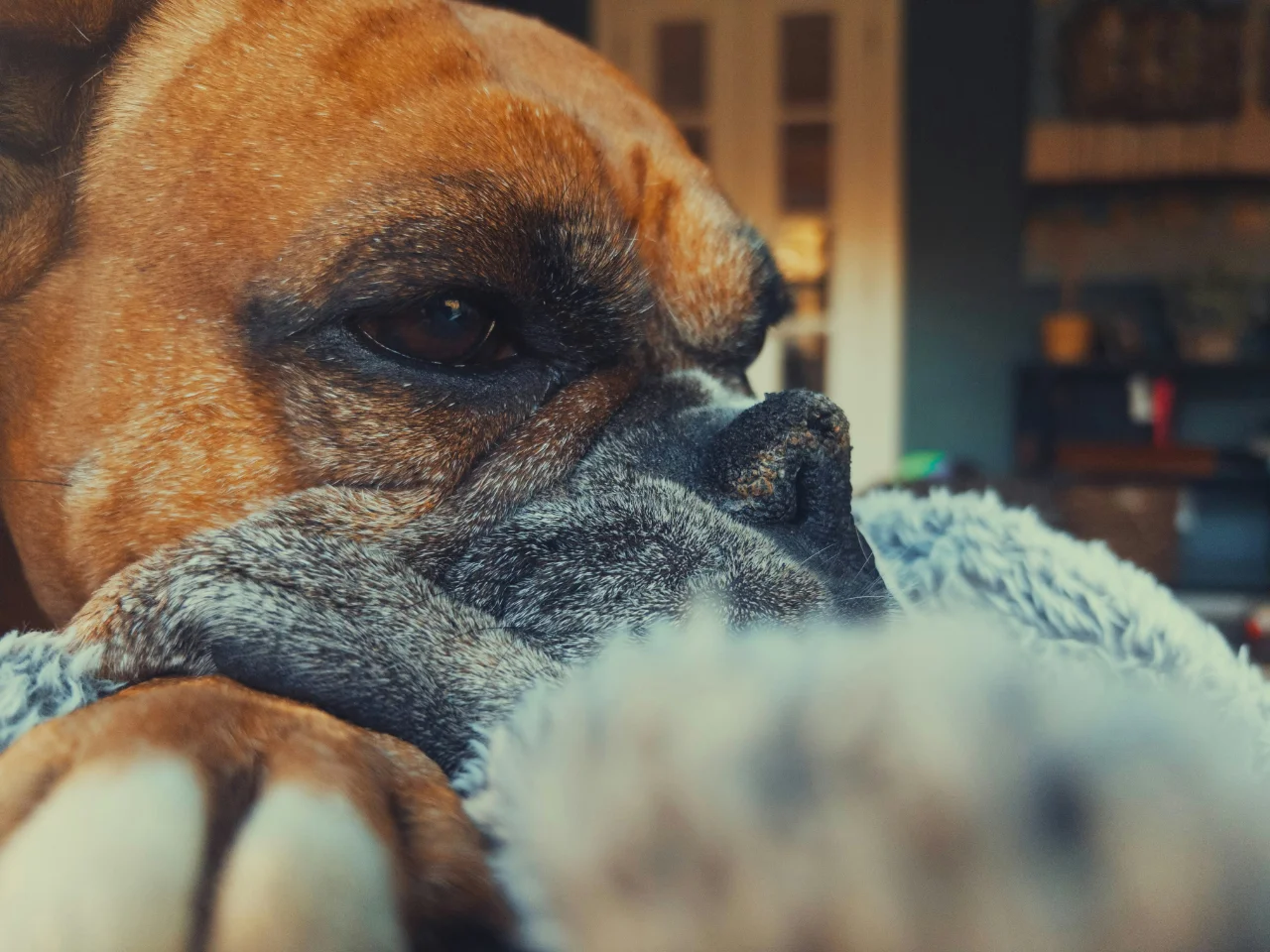
Before you work on how to stop dog chewing, it's worth figuring out why your dog is chewing. The fix depends on the cause, whether that's separation anxiety or boredom or something else.
Separation anxiety
If your dog mostly chews when they're left alone for long periods, and they chew on your things, door frames, or window ledges, anxiety may be behind it. You might also hear from the neighbours about barking or howling, or come home to drool, a worn path by the door, or an accident. For tougher cases, a dog trainer or behaviourist is worth bringing in. Our guide to separation anxiety in dogs explains more.
Teething
Puppies under about six months who chew constantly are probably teething. Cold, firm chew toys can help soothe sore gums.
Hunger
Dogs on calorie-restricted diets may resort to chewing things that smell like food, like lunch bags, garbage, or dish towels.
Stress or frustration
A dog may chew when they're overexcited, when guests arrive, or when they can see something they can't get to, like a squirrel through the window.
Mouth pain or medical problems
Sudden changes or excessive chewing, especially in an adult or senior dog, can point to dental pain. Some dogs chew more to relieve a sore tooth, while others suddenly stop chewing hard things. Knowing how to clean a dog's teeth helps catch problems early. Licking and chewing at paws or skin is a different issue and often points to allergies. See why dogs lick their paws.
If you're not sure what's going on, make an appointment with your vet. A wellness exam is a good place to start. Your vet can check your dog's mouth and rule out health problems.
How to Stop Dog Chewing, Step by Step (Puppy or Dog)
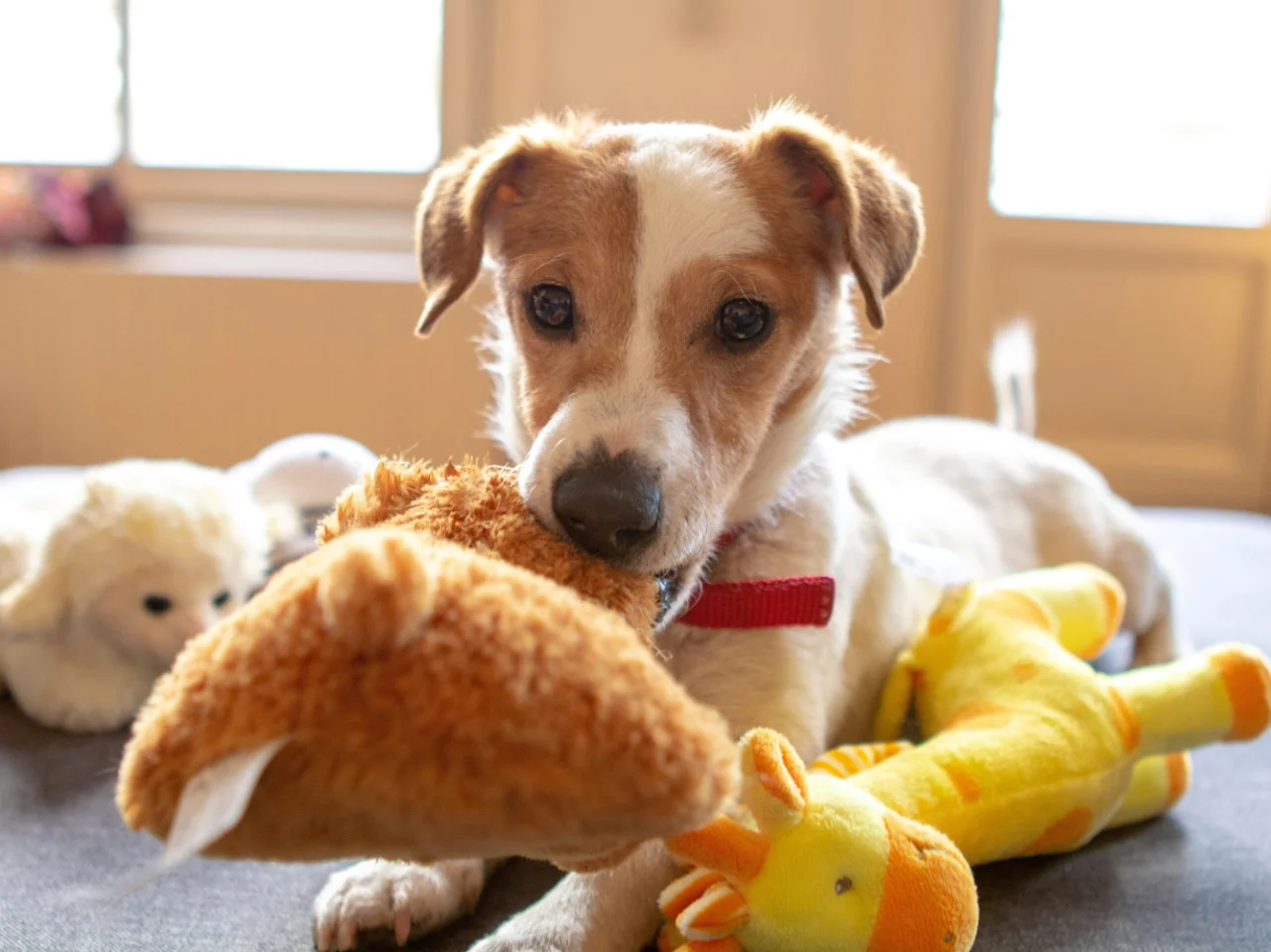
The best ways to curb destructive chewing combine management, redirection, and more activity. These steps cut down inappropriate chewing in both puppies and adult dogs.
- Dog-proof your home. Trying to prevent your dog from destructive chewing? Start here. Put shoes, remotes, kids' toys, books, and laundry out of reach. Close doors to rooms with tempting items. Keep garbage behind a cupboard door.
- Give appropriate chew toys. Think about the type of chew your dog prefers and offer a mix of textures: rubber toys, rope toys, and safe edible chews. Our guide to safe chews and bones for dogs explains which are best.
- Use a taste deterrent. A dog deterrent spray with a bitter taste can help stop your dog from chewing furniture legs or cords. Use it alongside redirection, not instead of it.
- Supervise or confine. When you can't watch your dog, use a crate or a safe, dog-proofed room with lots of interesting toys. Don't crate for long stretches.
- Exercise before alone time. A tired dog naps instead of chewing, so fit in a good walk or play session before you leave.
Two more habits help a lot. One of our techs keeps a "toy library" in her hall closet and puts out just three toys at a time, swapping them every Sunday, and her beagle greets the swap like it's Christmas. And when you catch your dog with a slipper, trade it for something you want your dog to chew, praise them when they take it, and move on without any fuss.
What not to do to stop the chewing
- Don't punish after the fact. Unless you catch your dog in the act, they won't connect a scolding with something they chewed an hour ago. It just makes them anxious.
- Don't give old shoes or socks as toys. Dogs can't tell old from new.
- Don't muzzle your dog or tape their mouth. It's unsafe and doesn't solve the cause.
Indoor Activities to Help Your Dog Beat Winter Boredom
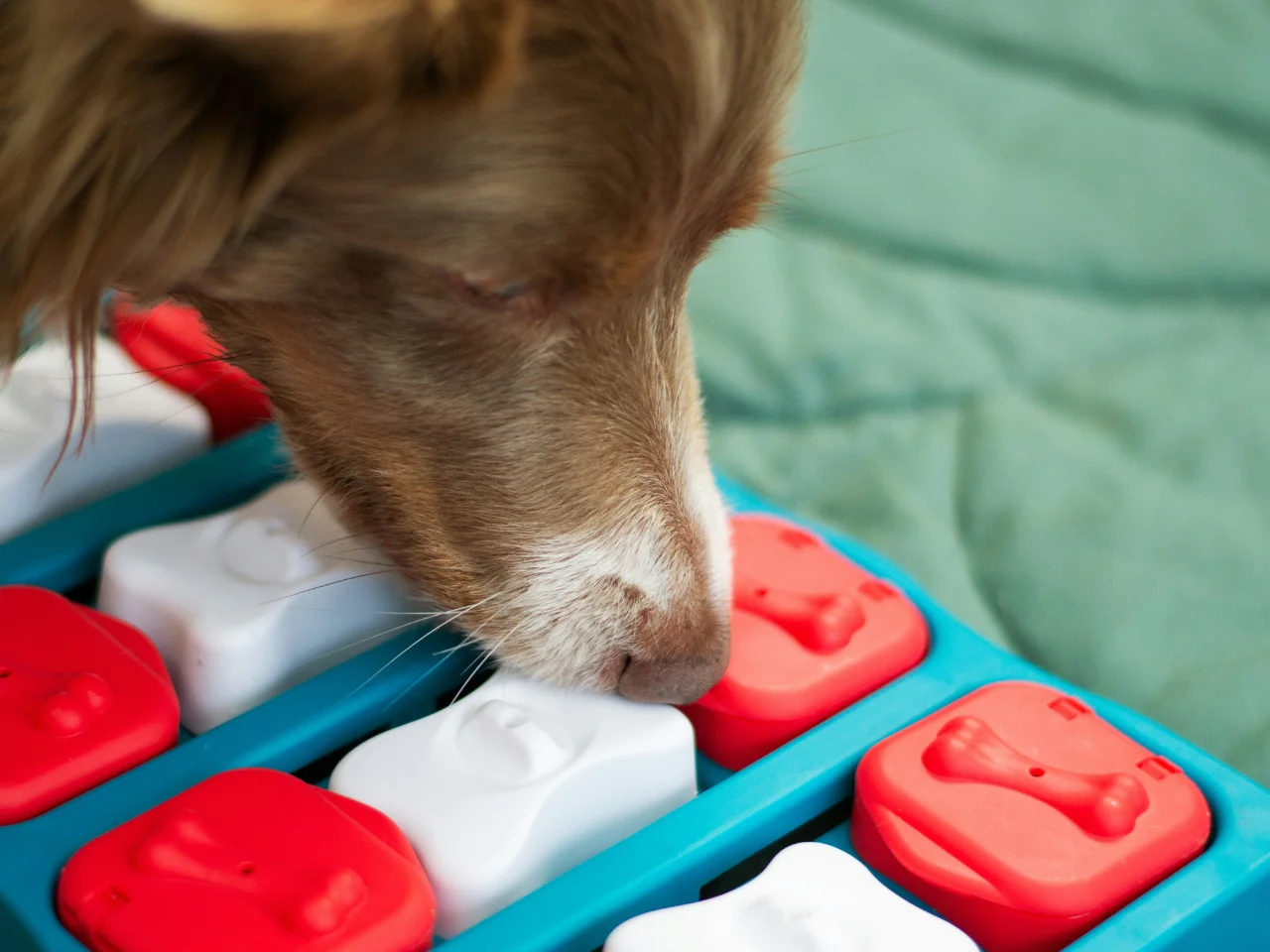
Honestly, the best way to get your dog to stop chewing in winter is to tire them out until they're too pooped to bother. On short-walk days, try these:
- Puzzle feeders and stuffed toys: Give your dog breakfast in a puzzle toy, or stuff a rubber toy with kibble and freeze it. It can keep a dog busy for a long time.
- Scent games: Hide treats around a room and let your dog sniff them out. Start easy, then make it harder.
- Short training sessions: Training your dog for five to ten minutes on sit, down, stay, or a new trick works your dog's brain.
- Tug and fetch: Basements and long hallways are great for this. Tug is a favourite for high-energy dogs.
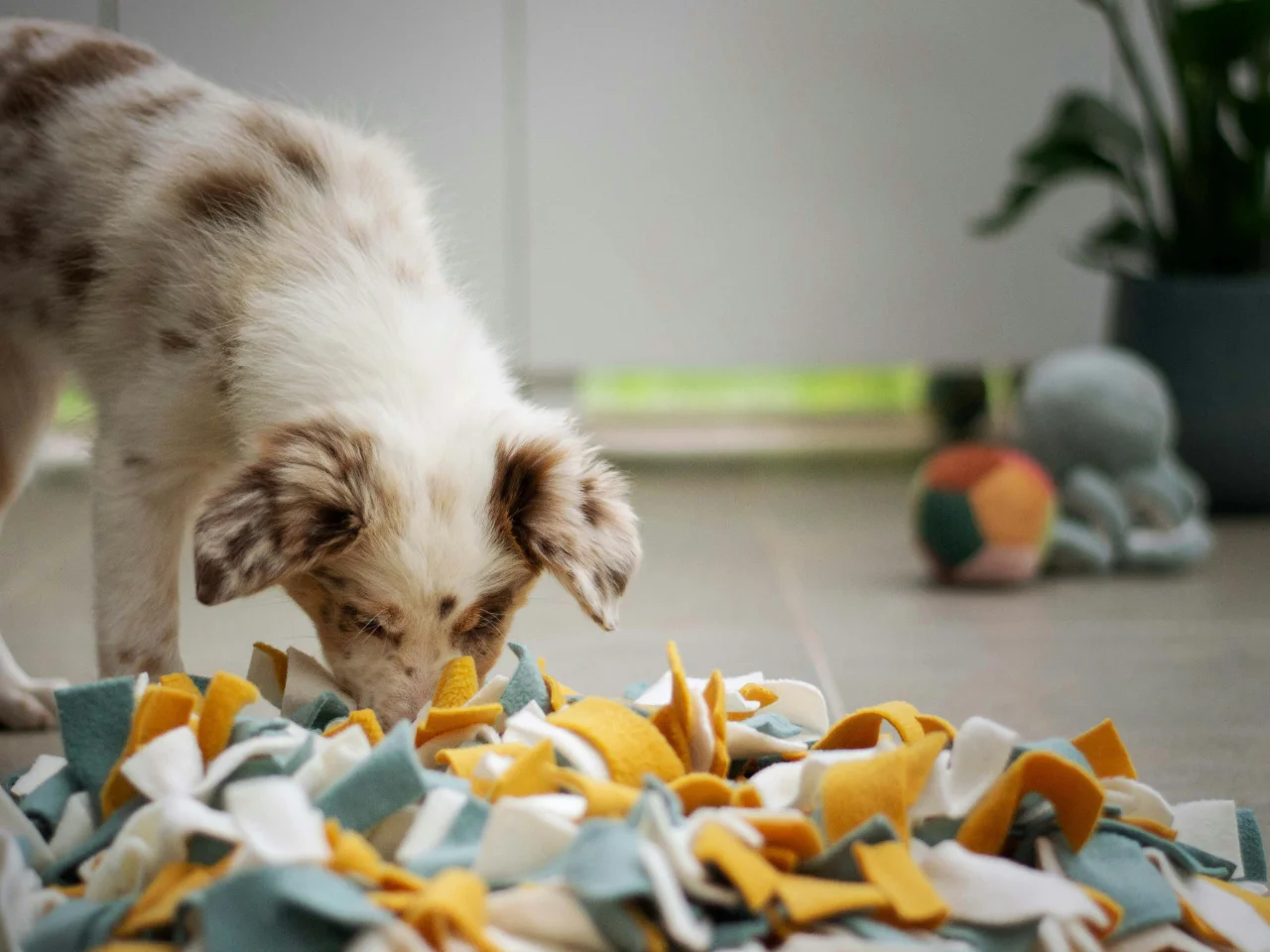
- Snuffle mats: Scatter kibble in a snuffle mat so your dog has to forage for it.
Our winter pet care tips have more cold-weather ideas.
When Chewing Becomes Dangerous
Chewing is usually a healthy habit, and most of it is just annoying. Sometimes, though, it's an emergency.
Swallowed objects
The things we've removed from dogs' stomachs could fill a junk drawer: socks, hair ties, squeaker toys, corn cobs, the odd sports bra. If something's gone missing and your dog starts vomiting over and over, won't eat, or seems sore and quiet, don't wait it out. Call us or go to an emergency clinic.
Dangerous items around the house
- Electrical cords: Chewing can also cause burns and electric shock when the target is a cord. Cover or hide them.
- Sugar-free gum: Many contain xylitol, which is extremely toxic. Read about xylitol poisoning in dogs.
- Medications: We see a lot of dogs who got into a purse on the floor. Pill bottles are surprisingly easy to crunch open.
- Batteries: The little coin-shaped ones from remotes and key fobs can burn the inside of the gut.
- Winter products: Keep antifreeze jugs and ice melt bags up on a garage shelf.
Final Thoughts
Learning how to stop dog chewing is mostly about understanding why your dog chews and making sure they chew on things that belong to them. In winter, less exercise and more time indoors make boredom chewing much more common.
Figure out the why first. After that, it's mostly tidying up, swapping in good chews, and tiring your dog out. Give it a few weeks. Most households see a real difference by the time the snow melts.
If your dog's chewing feels out of control, or you think they've swallowed something, contact us. We're happy to help you sort it out.
Frequently Asked Questions
Why is my dog suddenly chewing everything?
In our experience, there's almost always a trigger, though it may take a little digging to find.
- Boredom: Compare your dog's daily walks now with what they were getting in September.
- Stress: Houseguests over Christmas.
- Anxiety: Mess only shows up after you've been out, which hints at separation anxiety rather than boredom.
- Dental pain: Worth ruling out in any dog over seven.
- Next step: A vet visit can rule out medical causes.
At what age do puppies stop chewing everything?
Most puppies settle down after teething ends.
- Teething: Usually done by about six months.
- Adolescence: Plenty of owners are caught off guard by a second chewing phase between roughly 7 and 12 months.
- Breed: Your Lab may still love a good chew at age ten, and that's fine.
- Training: The more consistent the whole household is, the faster it sticks.
- Lifelong habit: Grown dogs still want something to gnaw on, so keep good chews around.
Should I punish my dog for chewing?
We'd steer clear of it.
- Timing: By the time you find the chewed shoe, your dog has no idea why you're upset.
- Anxiety: A nervous dog who gets scolded often chews more, not less.
- Better option: Interrupt calmly and offer a chew toy.
- Praise: Reward your dog when they chew the right thing.
- Prevention: Keep tempting items out of reach.
What are the best chew toys for dogs who destroy everything?
Look for durable, safe options sized for your dog.
- Tough rubber toys: Can be stuffed with food.
- Puzzle feeders: Keep your dog busy longer.
- Rope toys: Good for tug, but supervise.
- Edible chews: Choose ones your vet approves.
- Avoid: Cooked bones and anything small enough to swallow.
Can separation anxiety cause chewing?
Yes, it's one of the most common reasons for destructive chewing.
- Timing: Chewing happens mainly when you're away.
- Targets: Back door, blinds.
- Other signs: Set up a phone camera once. Pacing and whining near the door tell you a lot.
- Help: Very short absences first, stretched out bit by bit over a couple of weeks.
- Professional support: Some dogs need more than training, and we can help with that.

