


TL;DR: What You Need to Know About Cat Eye Infection
- Warm weather risks: Hotter months increase exposure to dust, allergens, and germs—making eye issues more likely and raising the chances you’ll notice eye infection symptoms early.
- Common causes to watch: Infections may come from bacteria, viruses, allergies, debris, or minor injuries that can cause conjunctivitis or irritation.
- Spot the early signs: Look for red eyes, tearing, discharge, squinting, or light sensitivity—these are often the first clues something isn’t right.
- Act early for better outcomes: If symptoms persist, worsen, or affect vision, it’s best to act quickly to avoid complications and support faster recovery.
- Prevention goes a long way: Simple steps like keeping your cat indoors during peak heat, maintaining hygiene, and routine vet checks help prevent your cat from developing eye problems.
- At-home care tips: Gently clean around the eyes, monitor for changes, and avoid irritants that may trigger flare-ups.
Do you suspect your cat has an eye problem? Get in touch with us. We’re here to diagnose your cat’s symptoms, provide the right treatment, and help keep their eyes healthy and comfortable.
Warm weather can increase your cat’s exposure to irritants, allergens, and germs—making cat eye infection cases more common. From dust and allergens to increased outdoor exposure, your cat may become more susceptible to eye problems during hotter months.
Knowing the causes of cat eye infections and when to take action can help you protect your pet’s vision and comfort. In this blog, we'll look at common causes of cat eye infections, warning signs of eye problems, and when to seek veterinary care to help protect your cat’s eye health and general well-being.
Common Causes of Eye Infections in Cats

Knowing what’s behind your cat’s eye infection can help you respond quickly and choose the right care before the condition worsens.
Bacterial Infections
A bacterial infection can quickly affect the surface of the eye, leading to irritation and inflammation. These infections often result in cat eye discharge and may require antibiotic eye medications, such as drops or ointment, to clear up. If untreated, secondary infections can develop and worsen the condition.
Viral Infections (Herpesvirus, Calicivirus)
Certain viral infections, caused by a virus like feline herpesvirus or calicivirus, are common causes for cat eye problems. These are often linked with upper respiratory infections and may also cause nasal discharge along with eye discharge.
Allergies and Pollen
Seasonal allergens can trigger inflammation of the conjunctiva, commonly known as conjunctivitis in cats or pink eye. This is a very common eye disease in cats, making your cat’s eyes appear red and swollen.
Foreign Debris or Dust
Small particles can enter the corner of the eye, irritating the eyelid and surface of the eye. This can lead to excessive tearing and discomfort, especially if not removed promptly.
Scratches from Fights or Plants
Injuries to the corneal area can occur from scratches. These are serious eye conditions that may lead to long-term damage or even glaucoma if untreated.
Increased Outdoor Exposure in Heat
During warmer months, a cat may roam more, increasing exposure to irritants and pathogens. This raises the likelihood of experiencing eye problems or a resurgence of the infection if they’ve had prior issues.
Symptoms and Signs of Cat Eye Problems
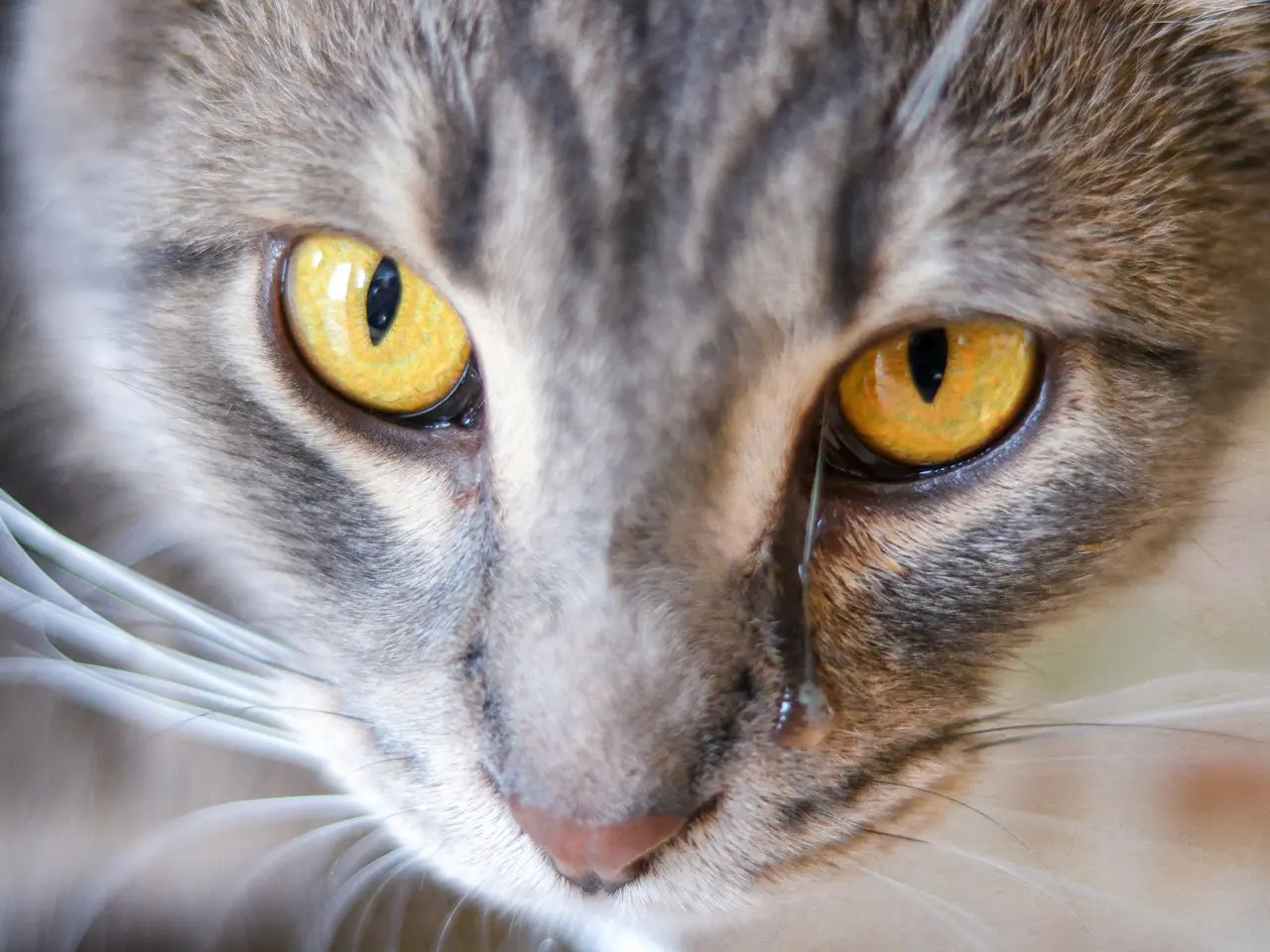
Recognizing early signs of eye trouble can make a big difference, helping you address discomfort before it develops into something more serious—so it’s worth paying close attention to small changes.
- Excessive tearing or watering: One of the earliest signs of eye trouble is excessive tearing, which may start as a clear discharge and gradually become thicker if irritation continues.
- Red or swollen eyelids: If you notice redness and swelling around the eyelids, it often points to inflammation or infection, making the affected eye look irritated and uncomfortable.
- Squinting or pawing at the eye: A cat may squint or show discomfort through pawing at their eye, which usually signals pain, sensitivity, or something bothering the surface.
- Discharge (clear, yellow, or green): Cat eye discharge can vary in colour—clear fluid may be mild irritation, while yellow or green discharge often suggests an infection that may need care.
- Cloudy or hazy appearance: A cloudy look in the eye can indicate more serious conditions such as corneal ulcer, dry eye, or keratoconjunctivitis sicca, all of which can affect vision if left untreated.
- Light sensitivity: If your cat exhibits sensitivity to light, it may be dealing with irritation or surface damage, and this is also a symptom of eye problems worth checking out sooner rather than later.
When to Seek a Vet for Help

While some mild eye problems may resolve on their own, other signs are your signal to act fast and seek professional help to preserve your cat’s eyesight and general health.
Sudden Vision Loss
If you notice your cat struggling to see, bumping into objects, or acting disoriented, this could point to a serious eye disease that needs immediate attention.
Eye Trauma or Injury
Any visible injury—especially around the corneal area—should be treated as urgent, since even small damage can quickly lead to complications without proper care.
Thick or Coloured Discharge
Persistent or heavy discharge, especially yellow or green, may mean your cat is suffering from an eye infection that requires prescription medication and close monitoring.
Symptoms Lasting Over 24 Hours
If symptoms don’t improve within a day, it’s best to seek treatment early so your vet can determine the best treatment and prevent the condition from worsening.
Severe Swelling or Redness
Intense swelling or redness may signal a deeper issue, and treatment may involve antibiotics or more specialized care, depending on the cause.
Accompanying Fever or Lethargy
If your cat is showing signs like fever, low energy, or loss of appetite, it may be part of a broader health problem—so see a vet if your cat seems unwell overall.
How to Prevent Cat Eye Infections and Keep Your Cat Safe

Simple daily habits and preventive care can go a long way in keeping your cat’s eyes healthy and lowering the risk of future problems.
- Regular veterinary checkups: Routine visits help catch early signs of trouble and monitor existing issues, allowing your vet to recommend the right treatment options before things worsen.
- Keep indoors during peak heat: It’s important to cut down the amount of time your cat spends outdoors, particularly during extreme conditions. This can help cut down on irritants and the risk of bacterial or viral infection.
- Clean face and eyes gently: Use a soft, damp cloth to clean around the eye area, and avoid using home remedies unless your vet specifically recommends them.
- Maintain clean living environment: Keeping your home free from excess dust and allergens can reduce irritation that may otherwise lead to eye discomfort or infection.
- Vaccinate against common viruses: Staying up to date with vaccinations helps protect against major illnesses that can lead to eye complications over time.
- Trim nails to prevent scratching: Regular nail trims lower the risk of accidental injury, especially if your cat shows signs of irritation or tends to rub its face often.
If you notice anything wrong with your cat’s eye, don’t wait to have it checked out – early treatment can be very helpful in terms of comfort as well as healing. If you think your cat needs professional care, trust your instincts and seek help right away.
Final Thoughts
Cats tend to be more prone to eye infections in warmer weather, when they are exposed to more allergens, dust and pathogens. The quicker you act to avoid complications, the easier it is if you recognize early signs like redness, discharge, or squinting. Some cases may appear mild, but eye conditions in cats can progress quickly and affect vision if left untreated.
Regular monitoring, good hygiene, and limiting outdoor risks during hot months can significantly reduce infection chances. Always consult a veterinarian if symptoms persist or worsen, as prompt treatment ensures better outcomes and helps maintain your cat’s health and long-term eye wellness.
Frequently Asked Questions
What causes eye problems in cats?
Cat eye problems can be caused by infections, the environment or physical trauma, especially in warm weather.
Bacterial infections: These can cause the surface of the eye to become inflamed, often producing discharge, and need medicated treatment to prevent worsening.
Viral infections: Viruses such as herpesvirus are common causes of recurrent eye irritation with respiratory symptoms.
Allergens and pollen: Seasonal irritants can cause inflammation of the conjunctiva, leading to redness, swelling, and discomfort.
Dust or debris exposure: Small particles that enter the eye can irritate the surface and may even affect the third eyelid if not removed.
Injuries or scratches: Traumatic injuries from fighting or plants can injure delicate structures of the eye and cause serious complications.
What are the early signs of eye infections in cats?
Spotting symptoms early helps prevent minor irritation from becoming a more serious eye condition.
Watery or teary eyes: Excessive tearing is often the first visible sign of irritation or infection.
Redness and swelling: If your cat's eyelids or eye tissue are red and swollen, this means there's inflammation that needs to be looked at.
Squinting or discomfort: Cats may squint or paw at one eye when they are in pain.
Discharge colour: Clear discharge may be a sign of allergies, yellow or green discharge may be a sign of infection.
Cloudiness or sensitivity to light: These signs may indicate deeper eye involvement and should not be ignored.
When should I take my cat to the vet for an eye problem?
Some symptoms require prompt veterinary care to protect your cat’s vision and overall health.
Sudden vision changes: Difficulty seeing or bumping into objects signals a potentially serious condition.
Visible injuries: Eye area trauma needs urgent assessment to prevent complications.
Discharge that won’t go away: Your cat may need prescription eye ointment to properly care for thick or colored discharge.
Symptoms that last longer than a day: If your cat's symptoms aren’t improving, you should have a professional evaluation.
Severe swelling or signs of illness: Intense redness, fever, or lethargy may indicate a more serious underlying issue.
How can I help prevent eye infections in my cat?
Preventive care and simple daily habits can significantly reduce the risk of eye problems.
Routine vet checkups: Regular visits help detect early issues and guide proper treatment of eye conditions.
Limit Outdoor Exposure: Keeping your cat indoors during peak heat will reduce contact with irritants.
Safe for cleaning around the eyes: Wipe around the eyes with a soft, damp cloth to remove buildup.
Keep your environment clean: Reducing dust and allergens in your home will reduce the chance of irritation.
Keep nails trimmed: Short nails help prevent accidental scratches that could injure the eye.
Can warm weather make cat eye infections worse?
Yes, hot weather can increase exposure to irritants and germs, making infections more likely.
More time outside: In warm weather, cats wander more, exposing themselves to more dust and debris.
Higher allergen concentrations: Pollen and environmental irritants are more present in warmer months.
Increased bacterial growth: Bacteria which cause infections may grow more readily in warm conditions.
Recurring issues: Heat can bring on flare-ups in cats with a history of infection.
Increased risk for irritation: Some environmental factors can increase sensitivity and lead to eye problems.

