

TL;DR: What You Need to Know About Your Cat's Age
- Cat years work differently: A cat’s years in their first stages develop quickly, the first year equals about 15 human years, and by age two, cats are roughly 24 in human years.
- A 12-year-old cat is a senior: At this stage, your cat is comparable to a human at about 64 years, which means extra attention to health, comfort, and routine care becomes important.
- Life stages guide care: From kitten to senior years, each stage has distinct dietary, exercise, and health requirements. Long-term well-being is supported by being aware of your cat's life stage.
- Indoor living helps cats live longer: Cats that live indoors typically live longer because they are protected from many environmental hazards and receive more regular care.
- Good care supports healthy aging: Balanced nutrition, regular veterinary checkups, and monitoring changes in behaviour or mobility all contribute to a healthier life for your cat.
- You can estimate a cat’s age: Clues like teeth condition, coat texture, eye clarity, and muscle tone can help determine their age, especially if your pet’s history is unknown.
Need help understanding your cat’s age or health stage? We can help assess your pet and guide you in giving your cat the best care at every stage of life.
Just like people, a cat goes through several stages of development, and each year in a cat’s life brings different needs and behaviours. While many people compare dog and cat aging using a dog age rule, feline aging works a bit differently. Whether you're caring for young cats or a senior cat, knowing how old your cat is in years in human terms makes a big difference in supporting a long, healthy lifespan.
In this blog, we'll help you calculate your cat’s age, understand the equivalent age in human years, and help you find out the age of your cat. Tracking your cat’s age can guide you with better nutrition, health care, and lifestyle choices for your pet.
Cat Age Calculator: How Many Cat Years in One Human Year?

Many pet owners try to figure out how old their pet is compared to people. A cat years calculator or cat years chart helps explain how feline aging works differently from humans.
First Year Equals the Equivalent of 15 Human Years
A kitten's one-year milestone is equivalent to 15 human years in the majority of comparisons between cat years and human years. This quick development occurs because a significant amount of human growth occurs during the first year.
Second Year Adds About 9 More Years
By the time a cat reaches 2 years old, its age equals approximately 24 human years. Many cat years chart models show that the first two years of a cat’s life progress much faster than later years, reflecting rapid growth and development.
Each Additional Human Year Is Four ‘Cat Years’
After the early stage, aging becomes more gradual. Each additional human year is four in cat comparison, meaning a year is four ‘cat years’ when converting the cat’s age in human years.
Cat Aging Is Not Perfectly Linear
Even with a cat years calculator, feline aging does not follow an exact formula. Many factors influence the equivalent age in human years, so calculating your pet’s age gives an estimate rather than an exact age.
Indoor Cats Age More Slowly
Indoor cats usually live longer than outdoor cats because they avoid many outdoor dangers, and they may experience a slower aging process.
Breed Size and Genetics Influence Aging
Different cat breeds develop and age at slightly different rates. Genetics, activity levels, and health history all influence how quickly a pet moves through its years for every stage of life.
Understanding Cat Life Stages

Just like people, a cat’s life is divided into different stages. Each stage represents a unique period of growth, behaviour, and health changes. Knowing the age of a cat helps owners adjust cat food, lifestyle, and medical care as their pet grows older.
Kitten Stage (Birth to 6 Months)
During the early months of age, kittens grow rapidly and learn important behaviours. At this stage, kittens develop coordination, social skills, and curiosity about the world. Because the first years of life involve rapid development, proper nutrition and safe environments help keep your cat healthy as it begins its journey through life.
Junior Stage (6 Months to 2 Years)
This stage covers the period leading up to 2 years old, when a kitten transitions into a young adult. Many cats reach near-full physical development during this time. The first two years of a feline's growth are significant because cat years are approximately 24 in human comparison by the end of this stage, meaning the pet’s age increases quickly compared to people.
Prime Adult Stage (3 to 6 Years)
When a cat is six years old or younger, within this stage, they are typically healthy, active, and confident. A cat at age 3 will be 28, meaning 3 will be 28 human years in approximate comparison. These adult cats usually maintain stable energy levels and benefit from balanced diets and regular play to support their overall cat lifespans.
Mature Stage (7 to 10 Years)
By around 7 years old, many cats begin transitioning toward maturity. Although they still enjoy activity, subtle physical changes may begin to appear. At this point in the cat years chart, monitoring weight, mobility, and diet becomes increasingly important to maintain long-term health.
Senior Stage (11 to 14 Years)
A cat enters its senior years during this stage. Older cats may sleep more, move a bit slower, and require adjustments in their routine. Preventive veterinary visits and appropriate cat food designed for aging pets help support their comfort and quality of life during their golden years.
Geriatric Stage (15 Years and Older)
When a cat reaches this stage, it has already enjoyed many years of life. Cats at this age may require additional health monitoring since some conditions appear as pets age faster later in life. A close partnership with a veterinarian ensures their changing cat needs are met and helps maintain comfort during the later chapters of a cat’s life.
12 Year Old Cat in Human Years: Converting Cat Years to Human Years
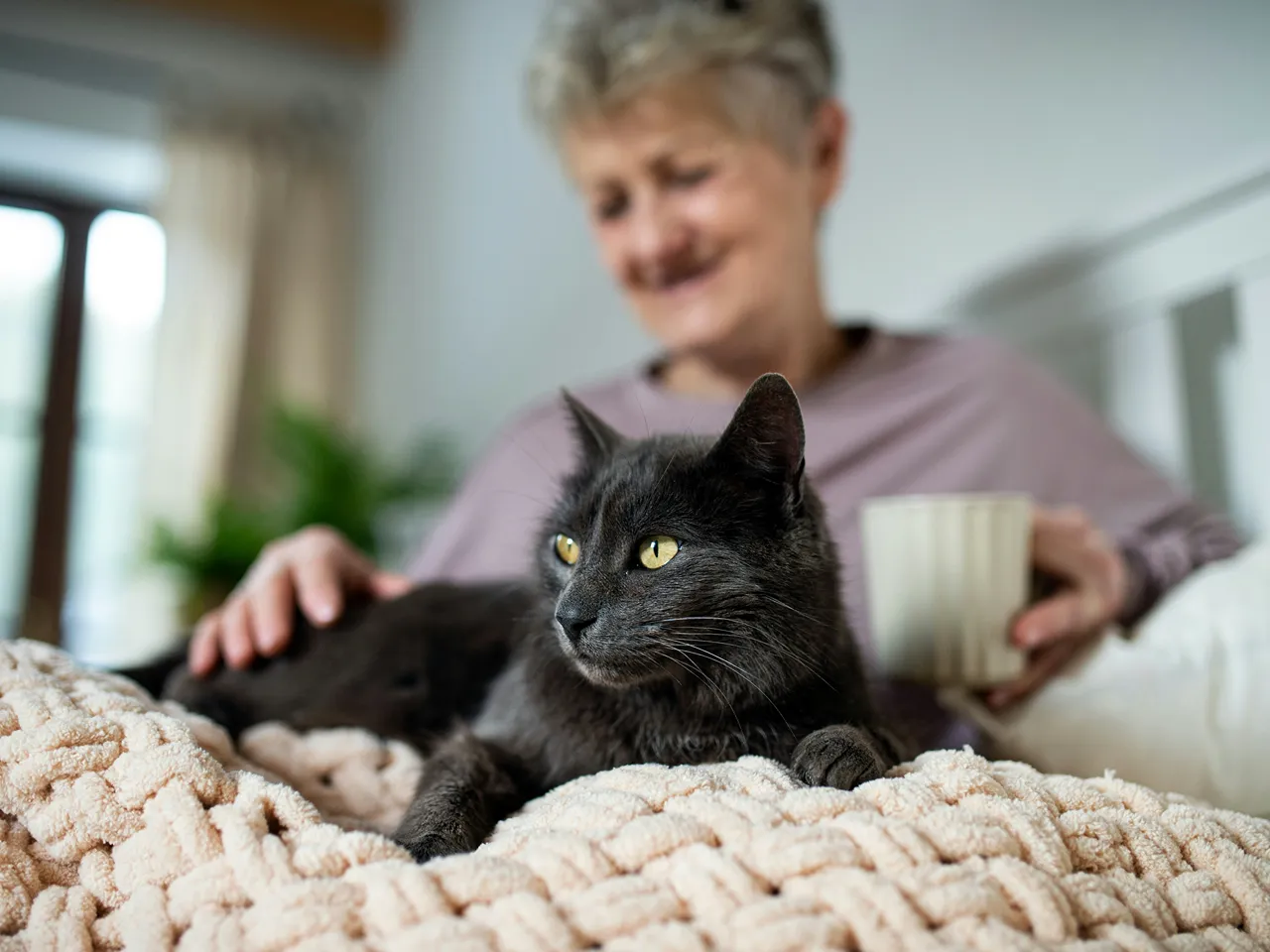
Many owners wonder about the cat’s age in human years once their pet reaches double digits.
12 Cat Years ≈ 64 Human Years
Using a cat age calculator, a 12-year-old cat is roughly 64 years old in human years. The first two years equal 24 human years, while the remaining years add roughly four human years for every feline year afterward.
At this stage, your pet officially becomes a senior cat. This means its daily routine and cat care may need small adjustments to support comfort and health. Regular checkups with a veterinarian help detect age-related issues early. Routine exams help determine their age-related risks and maintain wellness during the senior years.
Age-Related Conditions May Begin to Appear
As older cats age, they may experience dental issues, joint stiffness, or subtle behaviour changes. Monitoring eating habits and providing an appropriate diet helps support long-term well-being.
A cat at this stage may prefer quiet naps over intense playtime. That doesn’t mean activity disappears entirely, but owners may notice slower movement compared with 1 year old or young cats.
How Long Do Cats Live?

A cat's average lifespan varies based on environment, genetics, and lifestyle. Due to environmental hazards, outdoor cats usually live 10–14 years, whereas indoor cats typically live 12–18 years. Because of this distinction, indoor cats typically have longer lifespans.
- Some Cats Live Well Into Their 20s: While many cats follow the typical cat lifespans, a few reach extraordinary ages. The oldest cat ever recorded lived an incredible 38 years, showing how long feline years of life can be.
- Diet Plays a Major Role: High-quality cat food tailored to life stages supports healthy aging and contributes to a longer lifespan.
- Spayed or Neutered Cats Often Live Longer: Medical procedures that prevent reproduction also reduce certain health risks, helping improve the average lifespan.
- Genetics Influence Longevity: Just like with dog breeds, different cat breeds have varying life expectancies, which means each cat’s life journey can be unique.
How to Find Out The Age of Your Cat

If you adopted a pet and don’t know its exact age, there are several clues that help estimate your cat’s age.
- Check Dental Development and Wear: Teeth provide one of the clearest signs when calculating your pet’s age. Kittens develop baby teeth at around 2–4 weeks, and adult teeth appear by 3–4 months of age. In older pets, missing teeth or wear patterns can help estimate your cat’s age.
- Examine Coat Texture and Condition: A younger cat usually has soft, dense fur, while older cats often develop thinner or coarser coats. Observing fur condition can help estimate your cat’s age range.
- Look at the Cat’s Eyes: The clarity of a cat’s eyes changes over time. Younger cats often have bright, clear eyes, while slight cloudiness may appear as a pet ages.
- Observe Muscle Tone and Body Shape: Muscle mass gradually decreases as pets age. Comparing body shape with the common guidelines may help you figure out how old your pet might be.
- Consult a Veterinarian for an Estimate: A trained veterinarian can examine teeth, body condition, and health indicators to estimate your cat’s age and better understand the pet’s age stage.
Final Thoughts
Knowing the difference between human and cat years enables pet owners to take better care of their animals at every stage. Knowing the equivalent age in human years enables you to make educated choices regarding diet, health examinations, and lifestyle, regardless of how old your pet is.
A cat age chart gives important information about your cat's stage of life, even though they are estimates rather than precise figures. You can support your cat's health, comfort, and happiness for the duration of its life by being aware of these stages and modifying care appropriately.
Frequently Asked Questions
How do I calculate my cat's age in human years?
Understanding your pet's age helps you provide appropriate care at every life stage.
First Year Rapid Development: A kitten's first year represents the equivalent of 15 human years, making this period crucial for establishing healthy habits and proper nutrition.
Second Year Milestone: When your cat turns 2 years old, that's about 24 human years. This is the time when your cat goes from being a kitten to a young adult.
Formula for the Next Years: After the first two years, you can figure out how many years your pet will live by adding about four years for each year they live after that.
Using Tools for Accuracy: A cat age calculator and chart provide quick reference points to determine where your feline falls on the aging timeline.
Individual Variation Factors: Keep in mind that your pet's breed, lifestyle, and overall health all affect how quickly they age, so these conversions are only rough estimates.
What is the equivalent human age of a 12-year-old cat?
A 12-year-old feline has entered the senior stage and requires adjusted care.
Senior Status Conversion: Your pet is officially entering its golden years with evolving health needs at the age of 12, which is about 64 years old in human terms.
Gradual Aging Process: Each year after age two adds roughly four years to the calculation, which takes into consideration the quick early growth followed by more gradual aging.
Health Monitoring Becomes Critical: At this point, it's critical to plan routine veterinary examinations in order to identify age-related conditions like joint stiffness or dental problems early on.
Behavioural Changes Expected: Senior felines may prefer quieter activities and longer rest periods compared to their energetic younger days.
Lifespan Considerations: Whether your cat lives indoors or outdoors significantly impacts longevity, with indoor pets typically enjoying longer, healthier lives.
Why does the first year of a cat's life age so quickly compared to later years?
Human aging patterns are very different from the distinct timeline of feline development.
Compressed Maturation Period: Kittens experience extraordinary physical and mental development during their first months, achieving sexual maturity and near-full size within one year.
Second Year Continuation: The rapid aging continues through the second year, though at a slightly slower pace, as young cats refine their hunting skills and social behaviours.
Biological Survival Advantage: Age in Human Years advances so quickly in the early stages of life because cats had to mature quickly in order to survive in the wild.
Slowed Adult Aging: After reaching adulthood, the rate of aging slows down to about four years per year, which permits longer prime years.
Life Stage Importance: Understanding these discrete stages enables pet owners to appropriately modify play, nutrition, and medical care as their pet progresses through various developmental stages.
What factors influence how long my cat will live?
Multiple elements determine your feline's lifespan and overall quality of life.
Environmental Protection: Because they are less exposed to hazards like traffic, predators, and illness, outdoor cats typically live 10–14 years, whereas indoor cats typically live 12–18 years.
Nutrition Quality: Eating food that is appropriate for each stage of life promotes healthy organ function and helps avoid obesity-related disorders that can reduce life expectancy.
Medical Interventions: Spaying or neutering lowers some health risks and behavioural problems, which can lead to pets living longer lives.
Preventive Healthcare: Regular veterinary visits allow early detection of issues, and understanding your pet's equivalent age in human years helps you anticipate appropriate screening tests.
Genetic Predisposition: Different breeds carry varying life expectancy ranges, with some naturally prone to longevity while others face hereditary health challenges.
How can I determine the age of a cat I adopted without knowing its history?
Several physical and behavioural indicators help estimate an adopted pet's age range.
Dental Examination: Teeth are a good way to tell how old someone is because baby teeth come in between 2 and 4 weeks, adult teeth come in between 3 and 4 months, and wear patterns get worse as people get older.
Eye Clarity Test: Bright, clear eyes usually mean that the animal is young, while cloudy or changing lenses mean that it is getting older and going through its later life stages.
Analysis of Coat Condition: Younger cats have soft, dense fur, while older cats may have coarser or thinner fur and gray fur around their muzzles.
Body Composition: As they get older, muscle tone and definition slowly go down. Comparing their body shape to typical age ranges can help you guess.
Professional Evaluation: A veterinarian can examine multiple physical markers to provide the most accurate estimate of how old your adopted companion likely is.

